Blog / Exercise Physiology
VO2 Max by Age, Gender and Sport: Normal Ranges and Elite Standards (2026)
Comprehensive VO2 max reference tables with classification categories from Poor to Elite for every adult age group, plus sport-specific norms for runners, cyclists, swimmers, rowers, and more
The Direct Answer
A good VO2 max for men ages 30-39 is 47-51 ml/kg/min (Above Average). For women in the same age group, a good VO2 max is 38-42 ml/kg/min. Average VO2 max for the general adult population is approximately 35-45 ml/kg/min for men and 27-38 ml/kg/min for women.
VO2 max declines approximately 1% per year in sedentary adults but only 0.5% per year in regularly active adults. Elite endurance athletes of all sports typically score 70+ ml/kg/min (men) and 60+ ml/kg/min (women).
97.5
World Record VO2 Max (ml/kg/min)
85+
Elite Marathon Runner VO2 Max
~1%
Annual VO2 Max Decline (sedentary)
10%
Max VO2 Gain from HIIT Training
VO2 Max Norms by Age for Men (ml/kg/min)
The table below provides age-specific VO2 max classifications for men based on normative data from the American College of Sports Medicine (ACSM), the Cooper Institute, and the HUNT Fitness Study. Values are in ml/kg/min.
| Age | Poor | Below Avg | Average | Above Avg | Good | Excellent | Elite |
|---|---|---|---|---|---|---|---|
| 20–29 | <31 | 31–36 | 37–41 | 42–46 | 47–52 | 53–60 | >60 |
| 30–39 | <29 | 29–34 | 35–39 | 40–43 | 44–48 | 49–56 | >56 |
| 40–49 | <26 | 26–31 | 32–36 | 37–41 | 42–46 | 47–54 | >54 |
| 50–59 | <23 | 23–28 | 29–32 | 33–37 | 38–42 | 43–49 | >49 |
| 60–69 | <20 | 20–25 | 26–29 | 30–33 | 34–38 | 39–45 | >45 |
| 70+ | <17 | 17–22 | 23–26 | 27–30 | 31–35 | 36–42 | >42 |
Source: American College of Sports Medicine (ACSM) normative data, Cooper Institute fitness standards, and HUNT Study (Norway, n=4,631). Values in ml/kg/min.
VO2 Max Norms by Age for Women (ml/kg/min)
Women's VO2 max values are on average 10-15% lower than men's at equivalent training levels, primarily due to differences in hemoglobin concentration, heart size, and body composition. These norms account for those differences.
| Age | Poor | Below Avg | Average | Above Avg | Good | Excellent | Elite |
|---|---|---|---|---|---|---|---|
| 20–29 | <24 | 24–28 | 29–33 | 34–38 | 39–43 | 44–50 | >50 |
| 30–39 | <22 | 22–26 | 27–31 | 32–36 | 37–41 | 42–47 | >47 |
| 40–49 | <20 | 20–24 | 25–29 | 30–33 | 34–38 | 39–45 | >45 |
| 50–59 | <17 | 17–21 | 22–26 | 27–30 | 31–34 | 35–40 | >40 |
| 60–69 | <15 | 15–18 | 19–22 | 23–27 | 28–31 | 32–36 | >36 |
| 70+ | <13 | 13–16 | 17–20 | 21–24 | 25–28 | 29–34 | >34 |
Source: ACSM Guidelines for Exercise Testing and Prescription, Cooper Institute normative data, and published exercise physiology literature. Values in ml/kg/min.
VO2 Max by Sport: Recreational to Elite Standards
Different sports produce different VO2 max ceilings due to the volume of muscle mass engaged and the cardiovascular demands. Cross-country skiing produces the highest VO2 max of any sport because it fully engages both upper and lower body. Here are typical VO2 max ranges from recreational participant to elite athlete by sport.
| Sport | Recreational (Men) | Competitive (Men) | Elite (Men) | Elite (Women) |
|---|---|---|---|---|
| Distance Running | 45–55 | 55–65 | 70–85 | 62–75 |
| Road Cycling | 43–53 | 53–65 | 75–85 | 63–74 |
| Triathlon | 44–54 | 54–65 | 72–82 | 60–70 |
| Rowing | 42–52 | 52–62 | 68–80 | 58–68 |
| Swimming | 40–50 | 50–60 | 60–75 | 55–65 |
| Cross-Country Skiing | 50–60 | 60–72 | 80–97 | 70–82 |
| Soccer | 40–50 | 50–58 | 60–70 | 50–60 |
| Basketball | 38–48 | 48–56 | 55–65 | 45–57 |
| Sedentary (No Sport) | 28–38 | — | — | 22–30 |
Values in ml/kg/min. Source: Compiled from published exercise physiology literature including Bassett & Howley (2000), Lundby et al. (2017), and sport-specific studies. The all-time recorded VO2 max is 97.5 ml/kg/min (Oskar Svendsen, cross-country skiing, 2012).
Notable Elite Athlete VO2 Max Values
Published and estimated VO2 max values for elite athletes provide context for what the upper limits of human aerobic capacity look like.
| Athlete | Sport | VO2 Max (ml/kg/min) | Source / Notes |
|---|---|---|---|
| Oskar Svendsen | XC Skiing | 97.5 | Lab tested, 2012; all-time record |
| Bjorn Daehlie | XC Skiing | 96.0 | Lab tested; 8 Olympic gold medals |
| Miguel Indurain | Road Cycling | 88.0 | Lab tested during Tour de France era |
| Eliud Kipchoge | Marathon | ~85 | Estimated; world marathon record holder |
| Steve Prefontaine | Distance Running | 84.4 | Lab tested, University of Oregon |
| Lance Armstrong | Road Cycling | 83.8 | Lab tested, Indiana Univ. 1993 |
| Grete Waitz | Marathon | 73.0 | Lab tested; one of the highest women's values recorded |
| Joan Benoit Samuelson | Marathon | ~78 | Estimated; 1984 Olympic marathon champion |
What Does My VO2 Max Score Mean?
Your VO2 max score has direct implications for health, performance, and longevity. Here is what each classification level means in practical terms.
Poor (<25 men / <20 women)
Significantly below average for your age. Associated with elevated cardiovascular disease risk. Everyday activities may cause noticeable breathlessness. Structured aerobic exercise 3x per week can produce significant improvements within 8-12 weeks.
Below Average / Average (25-39 men / 20-32 women)
Baseline cardiorespiratory fitness. Can handle moderate aerobic activity comfortably. Sufficient for recreational sport participation. Some elevated health risk compared to active peers. Consistent training at this level produces measurable health benefits.
Above Average / Good (40-48 men / 33-41 women)
Solid aerobic fitness. Associated with significantly reduced cardiovascular risk. Can complete a half marathon or century ride comfortably. Strong enough to be competitive in local recreational events. This range corresponds to training 4-6 hours per week consistently.
Excellent (49-56 men / 42-47 women)
High-level recreational athlete fitness. Can sub-4:00 marathon (men) or sub-4:30 (women). Competitive at local and regional levels. Significantly reduced all-cause mortality risk — research shows VO2 max above 50 ml/kg/min in men over 45 is associated with substantially lower cardiovascular mortality.
Elite (>56 men / >47 women)
Competitive athlete fitness. Can qualify for Boston Marathon. Competitive at state and national amateur levels. A VO2 max above 60 for men is estimated to require dedicated structured training for 3+ years and represents the top ~1-2% of all recreational athletes.
How VO2 Max Changes with Age
| Age Decade | Sedentary Decline/Year | Active Decline/Year | Typical Average VO2 Max (Men) | Primary Mechanisms |
|---|---|---|---|---|
| 20–29 (Peak) | ~0% | ~0% | 43–47 | Peak cardiac output, max stroke volume |
| 30–39 | ~1.0% / year | ~0.5% / year | 40–44 | Slight cardiac output reduction |
| 40–49 | ~1.0% / year | ~0.5% / year | 36–40 | Reduced max HR, lower muscle mass |
| 50–59 | ~1.5% / year | ~0.7% / year | 31–35 | Significant max HR decline, muscle loss |
| 60–69 | ~2.0% / year | ~1.0% / year | 26–30 | Cardiac function, mitochondrial density |
| 70+ | ~2.5% / year | ~1.2% / year | 22–26 | All mechanisms accelerated |
Key finding: exercise cuts the decline in half
Multiple longitudinal studies show that regular aerobic exercise reduces the rate of VO2 max decline by approximately 50% compared to a sedentary lifestyle. The most effective intervention for maintaining VO2 max with age is high-intensity interval training (HIIT) performed 2-3 times per week in addition to regular aerobic base work.
Frequently Asked Questions
What is a good VO2 max by age?
A good VO2 max for men ages 30-39 is 44-48 ml/kg/min (Above Average). For men 40-49, a good VO2 max is 42-46 ml/kg/min. For women ages 30-39, good is 37-41 ml/kg/min. For women 40-49, good is 34-38 ml/kg/min. These thresholds place you in approximately the top 25-30% for your age group based on ACSM normative data.
What is the average VO2 max for a 40-year-old?
The average VO2 max for an untrained 40-44 year old male is approximately 38-43 ml/kg/min. For recreationally active 40-year-old men, the typical range is 45-50 ml/kg/min. For untrained women ages 40-44, the average is 30-35 ml/kg/min, rising to 36-42 for regularly active women.
What VO2 max do elite runners have?
Elite male distance runners typically have VO2 max values of 70-85 ml/kg/min. Eliud Kipchoge is estimated at 85 ml/kg/min. Elite female runners score 62-75 ml/kg/min. The highest VO2 max ever recorded in any sport is 97.5 ml/kg/min by Norwegian cross-country skier Oskar Svendsen in 2012.
How can I improve my VO2 max?
The most effective method is high-intensity interval training. The Norwegian 4x4 protocol (4 intervals of 4 minutes at 90-95% max heart rate) has been shown in clinical studies to increase VO2 max by 5-10% in 8 weeks. Beginners can gain 10-15% in their first year of consistent aerobic training. Combining regular Zone 2 base training with 2 HIIT sessions per week is the most evidence-based approach for VO2 max development.
Does VO2 max matter for health?
Yes — VO2 max is one of the strongest predictors of all-cause mortality and cardiovascular health. Research published in JAMA Network Open (2018, n=122,000) found that low cardiorespiratory fitness was associated with higher mortality risk than smoking. Each 1 MET (approximately 3.5 ml/kg/min) increase in VO2 max is associated with a 13% reduction in cardiovascular events. The health benefit of improving from Poor to Average VO2 max is larger than the benefit of stopping smoking.
Gear to Track Your VO2 Max
Most Garmin running watches estimate VO2 max from heart rate during runs. The good news: even the entry-level Forerunner 55 includes the same VO2 max algorithm as the flagship — pick based on display, battery, and features, not VO2 accuracy.
Garmin Forerunner 55
~$199. Same VO2 max algorithm as the Forerunner 965. Daily suggested workouts, recovery time advisor, race predictor. The 80/20 watch for most runners.
Check AmazonGarmin Forerunner 265
~$399. AMOLED display, training load, recovery time, HRV status. Same VO2 algorithm as the 965 with the same accuracy — at $250 less.
Check AmazonPolar H10 Heart Rate Monitor
~$90. Pairs with any watch above to upgrade VO2 max accuracy. Optical wrist HR drifts during intervals; chest strap doesn't. Best ROI accessory in this list.
Check AmazonCompare every VO2-max-capable watch in our best running watches guide for 2026 · best heart rate monitors →
As an Amazon Associate we earn from qualifying purchases at no extra cost to you.
Related Calculators and Guides
VO2 Max Calculator
Estimate your VO2 max from race time or fitness test
VO2 Max Race Predictor
Predict race times from your VO2 max score
Cooper Test Calculator
12-minute run test to estimate VO2 max
VO2 Max Improvement Timeline
Realistic gains by training level and timeline
Understanding Your VO2 Max Score
Plain-English guide to what your number means
Key Takeaways
- •Average VO2 max for untrained adults is 35-45 ml/kg/min (men) and 27-38 ml/kg/min (women) depending on age.
- •VO2 max declines ~1% per year after 25 in sedentary people; this slows to ~0.5% per year in regularly active adults.
- •Cross-country skiing produces the highest VO2 max of any sport; the all-time record is 97.5 ml/kg/min.
- •HIIT training (4x4 minutes at 90-95% max HR) can improve VO2 max by 5-10% in 8 weeks based on clinical evidence.
- •VO2 max is a powerful predictor of long-term health — each 3.5 ml/kg/min improvement is associated with ~13% reduction in cardiovascular risk.
- •Use the VO2 Max Calculator to estimate your score from a recent race time or Cooper test result.
Featured at Backcountry — 15% off first order
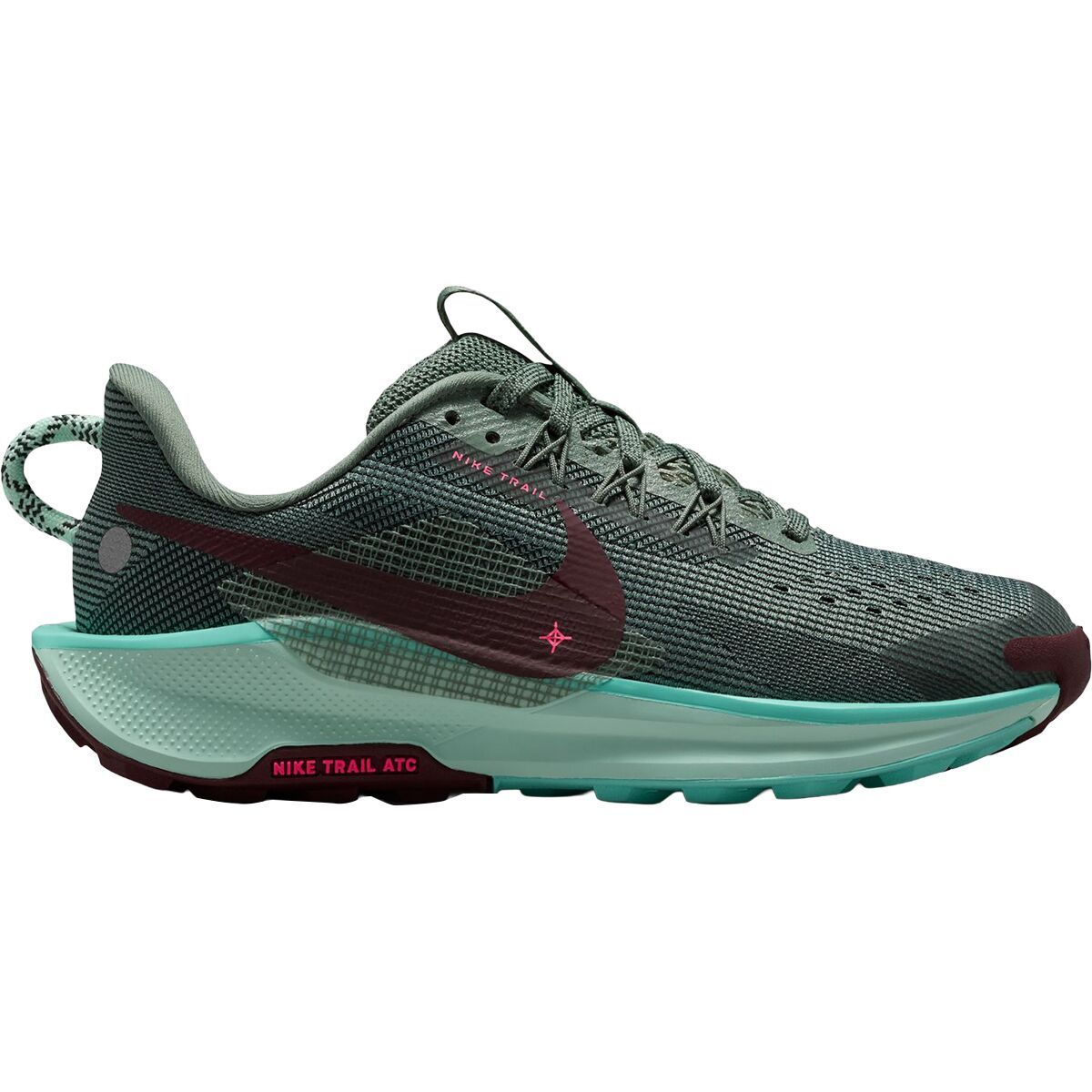
Nike Pegasus Trail 5
Our go-to trail-capable training shoe. React foam + sticky outsole.