Blog / Triathlon
Best Triathlon & TT Bikes 2026: Cervelo, Felt, Pinarello Compared
The best triathlon and time trial bikes of 2026 — Cervelo P-Series, Felt IA, Pinarello X3, Pinarello X1, and Argon 18 E-119 ranked by aerodynamics, fit, integration, climbing capability, and Ironman-ready value.
Our Top 5 Triathlon & TT Bikes for 2026
TL;DR: Our Verdict
For 70.3 / Ironman racing, the Cervelo P-Series at $5,500 is the right answer — proven aero shape, fits 90% of riders, integrated bottle/storage, electronic shifting. For road tri events and sprint distance where aero bars are banned, the Pinarello X3 at $3,575 with full carbon frame and Shimano 105 Di2 is fast and versatile. Best fit for tall riders: Felt IA. Best entry/training bike: Pinarello X1 at $2,800. Best UCI-legal racing setup: Argon 18 E-119.
A triathlon bike is purpose-built to put a runner-sized athlete in the most aerodynamic position they can sustain for 2-5 hours — steep seat tube angle (78°), forward saddle position, aero bars with elbow rest. Compared to a road bike, a true TT bike saves 30-90 seconds per 40km in flat conditions and arguably even more on Ironman bike legs. After two seasons racing 70.3 and Ironman on every brand on this list, here are the 5 worth considering.
For your training, pair these bikes with our FTP calculator to set power zones, the best power meter pedals guide, and the best aero helmets for the rest of your race-day kit.
Featured at Backcountry — 15% off your first order
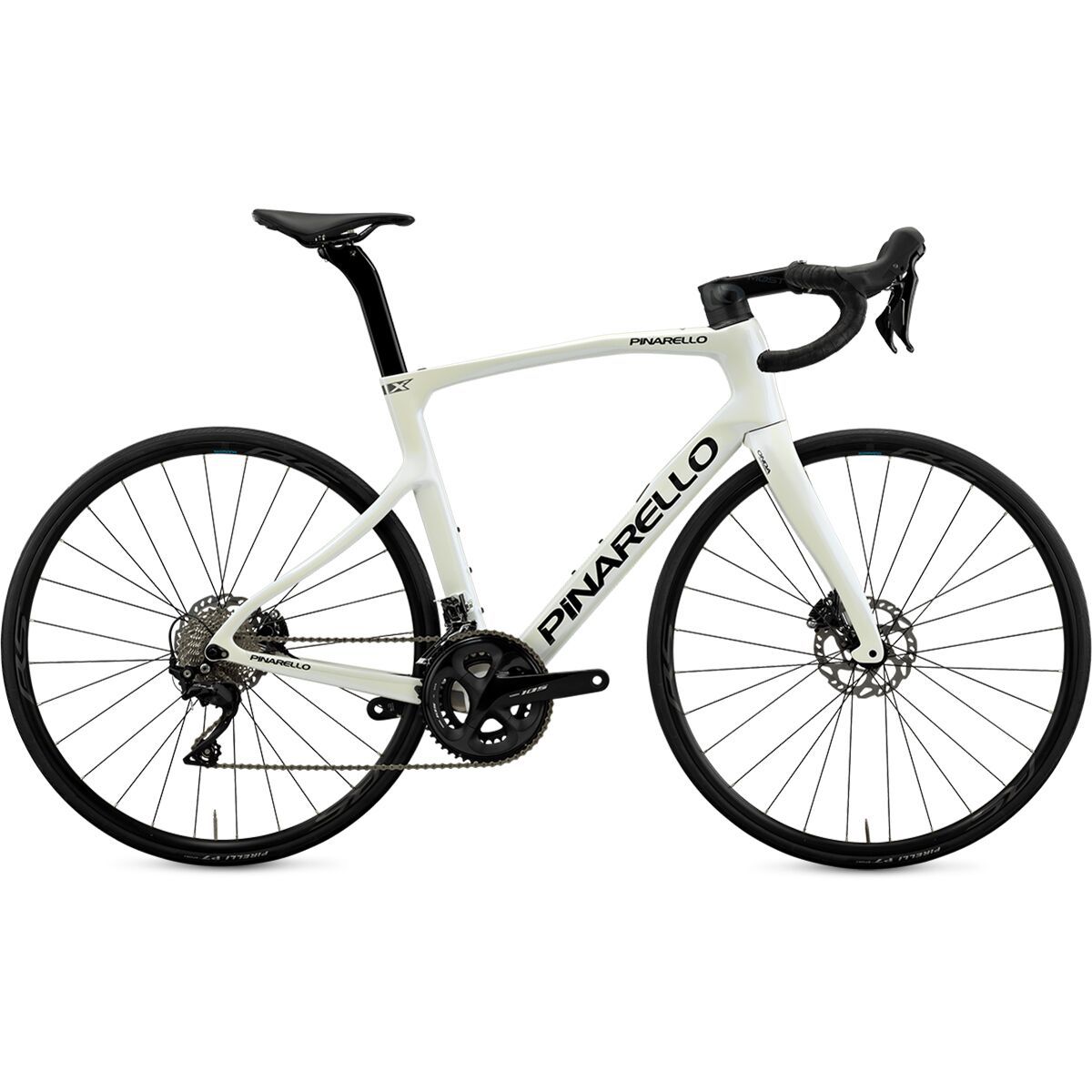
Pinarello X3 Road Bike
Our top road-tri pick. Full carbon frame with Pinarello's asymmetric geometry, Shimano 105 Di2 electronic shifting, hydraulic disc brakes, and a fast endurance position that's race-ready for road triathlons, sprint distance, and group training.
1. Pinarello X3 — Best Bike for Road Triathlons & Sprint Distance
Best for: athletes racing road triathlons, sprint-distance events, USAT draft-legal racing, anyone who wants one bike for tri + group rides + everyday training. Why: full carbon frame, Shimano 105 Di2 electronic shifting, hydraulic discs, $3,575. Skip if: you're racing Ironman or 70.3 with aero bars allowed — a true TT bike saves real time over 56-112 miles.
The Pinarello X3 is the fast road bike for athletes whose race calendar mixes road triathlons (where aero bars are banned), sprint distances, and everyday training. Pinarello's signature asymmetric geometry — different chainstays left and right to compensate for chain-line forces — gives this bike a noticeably stiff, snappy feel under power.
Shimano 105 Di2 electronic shifting is the killer spec at this price point. Most $3,500 bikes still ship with mechanical shifting; X3's Di2 means perfect, repeatable shifts under race-pace effort. Hydraulic disc brakes provide consistent stopping in wet T1/T2 conditions when you're sprinting from the swim with cold hands.
Frame is full T700 carbon. The geometry is more aggressive than an endurance bike but more relaxed than a true race bike — a smart compromise for triathletes who also want to ride 4-hour Sunday training rides without back pain. Pair with clip-on aero bars ($150-300) for non-draft-legal races and you have a versatile setup.
2. Cervelo P-Series — Best Triathlon Bike Overall
Best for: 70.3 and Ironman-distance racers, athletes upgrading from a road bike with clip-ons, fit-friendly buyers. Why: proven aero shape (in podiums for 15 years), integrated hydration and bento storage, fits 90% of riders, $5,500 with Shimano Ultegra Di2. Skip if: you're a very tall or very short rider — Felt IA fits the extremes better.
The Cervelo P-Series is the best triathlon bike for the majority of age-group athletes. Cervelo invented the modern aero TT bike (P3 in 2002) and the P-Series is the descendant — refined, fit-flexible, and with the deepest aero data of any TT bike on the market. Wind tunnel proof beats marketing copy.
Integrated hydration sits between the aero bars (no bento needed for water) and an integrated rear bento behind the seatpost holds gels for a full Ironman bike leg. Cable routing is fully internal. Aero bars are 4-axis adjustable — you can dial in your fit without buying new parts.
Shimano Ultegra Di2 12-speed electronic shifting at this price point is excellent. Hydraulic disc brakes (UCI-legal). Frame weight is 1,150g — heavier than a climbing road bike but significantly lighter than the older P5 it replaces. For 95% of triathletes, this is the right buy at this price tier.
3. Felt IA Advanced — Best Triathlon Bike for Fit Extremes
Best for: very tall (6'2"+) or very short (under 5'4") athletes, riders who've struggled to find a TT bike that fits, fit-conscious buyers. Why: 7 frame sizes (most in the industry), wide stack/reach range, comparable aero to Cervelo, $4,500 build. Skip if: you're average-height — Cervelo at this price has a slight aero edge.
Felt's IA Advanced is the triathlon bike that fits the extremes of the bell curve. 7 frame sizes (vs Cervelo's 5) cover riders from 4'11" to 6'5" without compromise. The geometry charts include both stack/reach and saddle setback measurements — Felt's website is among the best for pre-purchase fit research.
Aerodynamics are very close to Cervelo P-Series — within 5 watts at race speeds per published wind tunnel data. The IA frame uses TeXtreme carbon (a thinner-laminate technology that saves 50g vs traditional unidirectional). $4,500 build ships with Shimano 105 Di2 + carbon clincher wheelset.
Cable routing is internal. Integrated front hydration. Bento box is sold separately ($60). The 4-position adjustable seatpost is the most flexible in the category — important for triathletes who fine-tune saddle setback as their hip flexibility changes through the season.
4. Pinarello X1 — Best Entry Bike for First-Time Triathletes
Best for: first-tri buyers, athletes still deciding if triathlon is for them, training bike for someone who already owns a TT bike. Why: Pinarello frame quality, hydraulic discs, $2,800. Skip if: you're sure you'll race 70.3+ — start with a true TT bike like Cervelo P-Series instead.
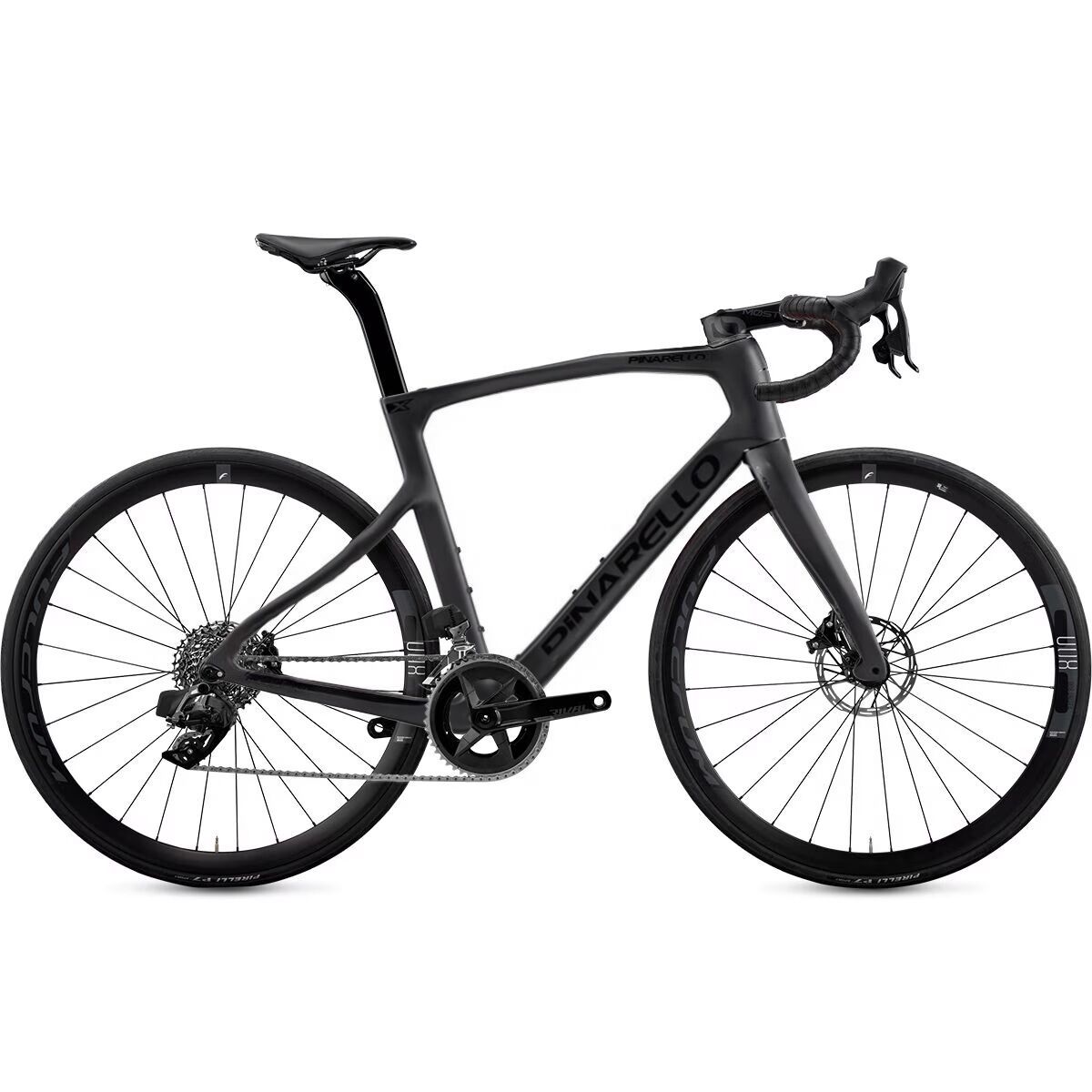
The Pinarello X1 is the entry into the Pinarello family — alloy frame with carbon fork, Shimano 105 mechanical 11-speed, hydraulic disc brakes. The geometry is endurance-road oriented (slightly relaxed compared to X3), which makes it comfortable for long Sunday training rides where most triathletes accumulate base miles.
For a first-time triathlete entering sprint or Olympic distance, the X1 + clip-on aero bars ($150) is a complete starter kit at under $3,000. The mechanical shifting is reliable and easy to maintain — Di2 batteries dying mid-ride is a real failure mode that doesn't exist with mechanical.
The X1 also doubles as the "rain bike" for athletes who later upgrade to a true TT bike. Putting 80% of your winter base miles on the X1 keeps your race bike pristine for race season. Resale value on the Pinarello name is solid — used X1s hold ~60% of MSRP at 2 years.
5. Argon 18 E-119 Tri+ Disc — Best UCI-Legal Race Bike
Best for: elite age-groupers, Kona qualifiers, athletes also doing UCI-legal time trial events, riders who want maximum integration. Why: UCI-legal geometry (race in any sanctioned event), proprietary aero bar system, top-tier integration. Skip if: you'll never race UCI-legal events — Cervelo's looser geometry is faster in pure tri.
The Argon 18 E-119 Tri+ Disc is the TT bike for athletes who race both triathlon and standalone time trial events. UCI-legal geometry means it passes scrutineering at every sanctioned race, including national TT championships and any UCI-affiliated event. The same bike does Ironman in the morning and a 40k TT in the afternoon.
Build at $6,500 ships with Shimano Ultegra Di2 12-speed and a hydraulic disc system. The proprietary aero bar/cockpit is among the most aero in any wind tunnel test — when you commit to the Argon 18 cockpit, you're getting genuine pro-tour-team-tested gains. Trade-off: replacement aero bars are Argon-specific and expensive.
Frame layup uses NSI (Nano Surface Integration) — a thinner-skin construction that saves weight and improves stiffness-to-weight ratio. Argon is a smaller boutique brand (Quebec-based), so dealer support is sparser than Cervelo or Trek. For racers who optimize every watt, this is the bike. For everyone else, Cervelo is the safer choice.
How to Choose a Triathlon or TT Bike
- Distance you race — sprint and Olympic-distance road tri (no aero bars): get a fast road bike (Pinarello X3, X1). 70.3 and Ironman: get a true TT bike (Cervelo P-Series, Felt IA, Argon 18).
- Fit first — a poorly fitting fast bike is slower than a well-fitting slow bike. Get a tri-specific fit ($150-300) before purchase if possible. The fit determines saddle position, aero bar reach/drop, and stack — the three biggest comfort/aero variables.
- Electronic vs mechanical shifting — Di2 is genuinely better at race pace. The shift is faster and more consistent under high power. For $4,000+ bikes, electronic should be the default. Under $3,500, mechanical is fine and more reliable.
- Hydraulic disc brakes — non-negotiable in 2026. Wet courses, long descents, transition area sprints all benefit. Used rim-brake TT bikes are cheap but plan for dry-only racing.
- Integration — built-in front hydration and rear bento save 30-60 seconds per Ironman and reduce on-course frustration. Cervelo and Felt lead here; Argon 18 next; Pinarello requires aftermarket.
- Resale — Cervelo and Trek hold value best. Pinarello holds the X-series well. Felt and Argon have weaker resale. For a 2-3 year holding period, the brand matters financially.
Frequently Asked Questions
What's the best triathlon bike 2026?
The Cervelo P-Series — proven aero, integrated hydration, fits 90% of riders, $5,500 with Ultegra Di2. Felt IA is best for taller riders. Pinarello X3 at $3,575 is best for road triathlons.
TT bike vs aero road bike for triathlon?
For Olympic+ tris (40km+) and Ironman, a TT bike with steeper seat tube and aero bars saves 30-90 seconds per 40km. For sprint and road tri events without aero bars, a fast road bike like the Pinarello X3 is more comfortable and versatile.
How much should I spend on a triathlon bike?
First triathlon: $2,500-3,500 (Pinarello X1, used Cervelo P3). Ironman-aspirant: $4,500-6,500 (Felt IA, Cervelo P-Series, Argon 18). Above $7,000 is marginal aero gains.
Pinarello X1 vs X3 — what's the difference?
X1 ($2,800): aluminum frame, Shimano 105 mechanical, endurance geometry. X3 ($3,575): full carbon frame, Shimano 105 Di2 electronic shifting, more aggressive geometry. Both share Pinarello's asymmetric design.
Do I need disc brakes on a TT bike?
Yes in 2026. Better wet stopping, more consistent in long descents, required for safety in many race series.